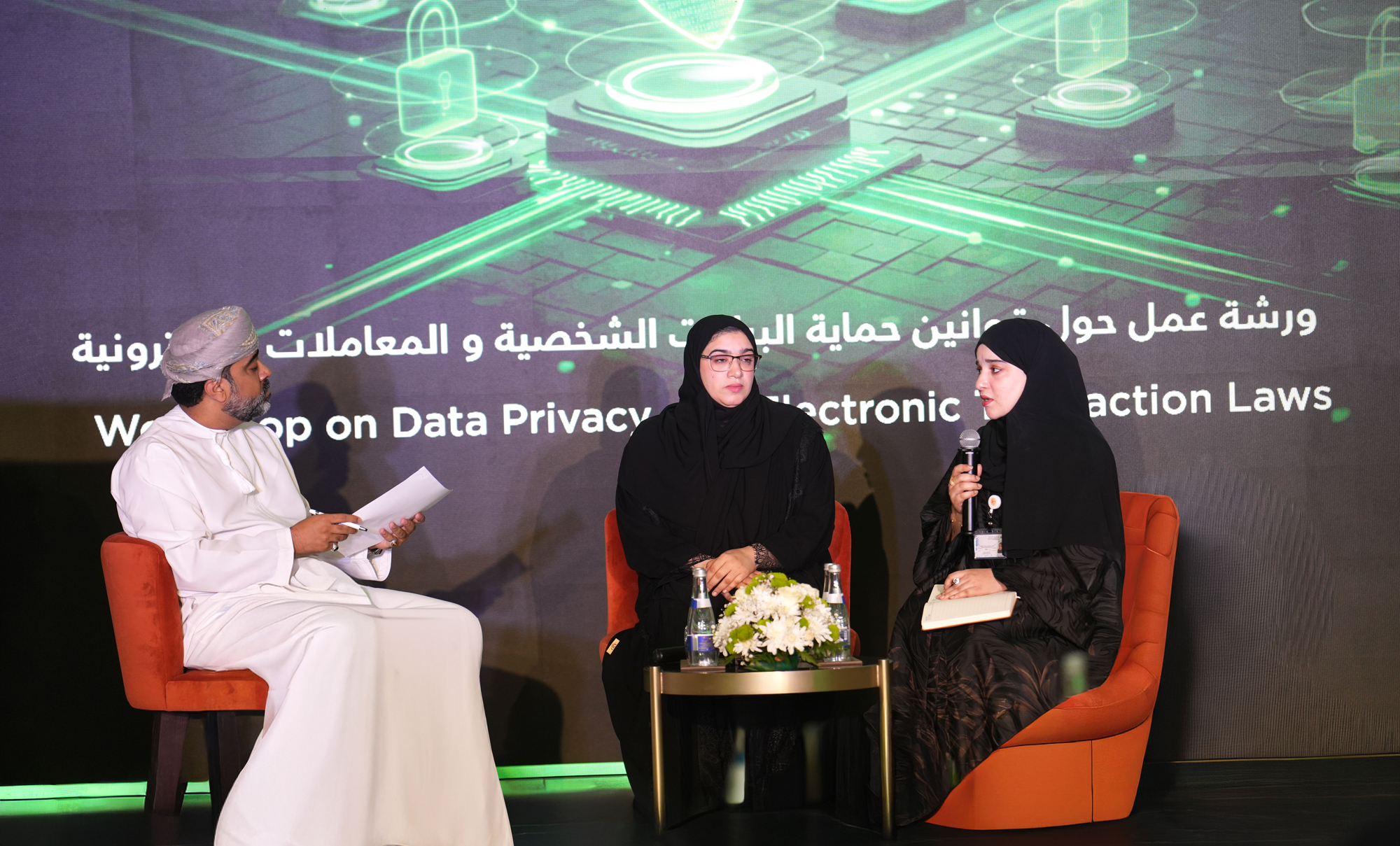
BankDhofar organizes workshop on Data Privacy and Electronic Transactions laws
BankDhofar organized a specialized workshop, in cooperation with the Ministry of Transport, Communications and Information Technology, highlighting the importance of the Data Privacy Law and the Electronic Transactions Law in strengthening digital trust. The event brought together a distinguished group of company representatives and experts from various sectors, including insurance, energy, real estate, and financial services.
The workshop forms part of the bank’s ongoing efforts to enable its partners and stakeholders to keep pace with legislative and technological developments that support business continuity and reinforce confidence in digital financial services, in line with BankDhofar’s vision of promoting innovation and excellence in the banking sector.
The initiative aimed to raise awareness of the latest regulatory frameworks governing the protection of personal data and the management of electronic transactions, amid the rapid acceleration of digital transformation in the Sultanate of Oman and the wider region.
Speaking at the event, Dr. Khalid bin Salem Al Hmoudi, Head of the Human Capital Group at BankDhofar, emphasized that the workshop reflects the bank’s commitment to fostering a secure and trustworthy business environment. He noted that compliance with data privacy and electronic transactions legislation is no longer optional, but a strategic imperative to safeguard customers and enable innovation in digital services.
“These legislations represent a cornerstone in building trust between institutions and their customers, providing a clear legal framework that mitigates both technical and legal risks,” he added.
The workshop featured a series of panel discussions and presentations addressing key aspects of the Data Privacy Law, including individuals’ rights to access personal data, mechanisms for data collection and processing, and the regulatory obligations placed on organizations. It also examined the Electronic Transactions Law, which grants legal recognition to digital contracts, regulates electronic signatures, and enhances the security of online payments and electronic transfers.
The event saw strong engagement from participants, who discussed practical challenges associated with implementing these laws and reviewed international best practices in data protection and cybersecurity. Case studies and practical examples highlighted the use of encryption technologies and multi-factor authentication to strengthen the security of electronic transactions.
At the conclusion of the workshop, participants underscored the importance of continued collaboration between the public and private sectors to develop integrated regulatory frameworks that support digital transformation. They also called for joint initiatives to promote a culture of compliance, data protection, and digital responsibility across all business sectors.